



1. Why Elevators Need Specialized VFDs
Unlike standard industrial VFDs, elevator drives must handle unique challenges:
- Safety-critical operation: Passenger safety depends on precise control
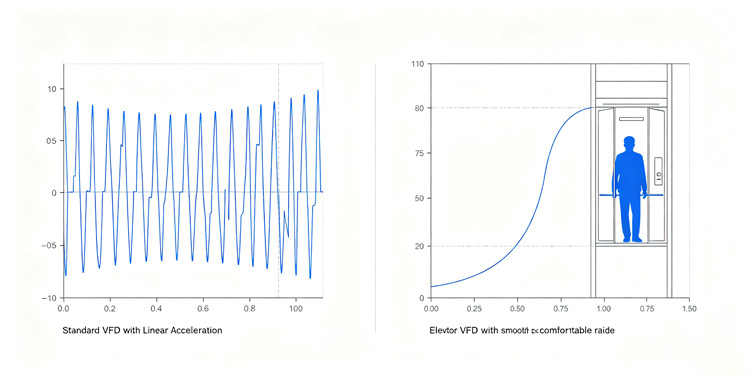
- Comfort requirements: Smooth acceleration/deceleration prevents nausea
- High starting torque: 150-200% torque needed for heavy loads
- Regenerative energy: Must handle power flow in both directions
- Emergency functions: 48V rescue power, fire mode, earthquake operation
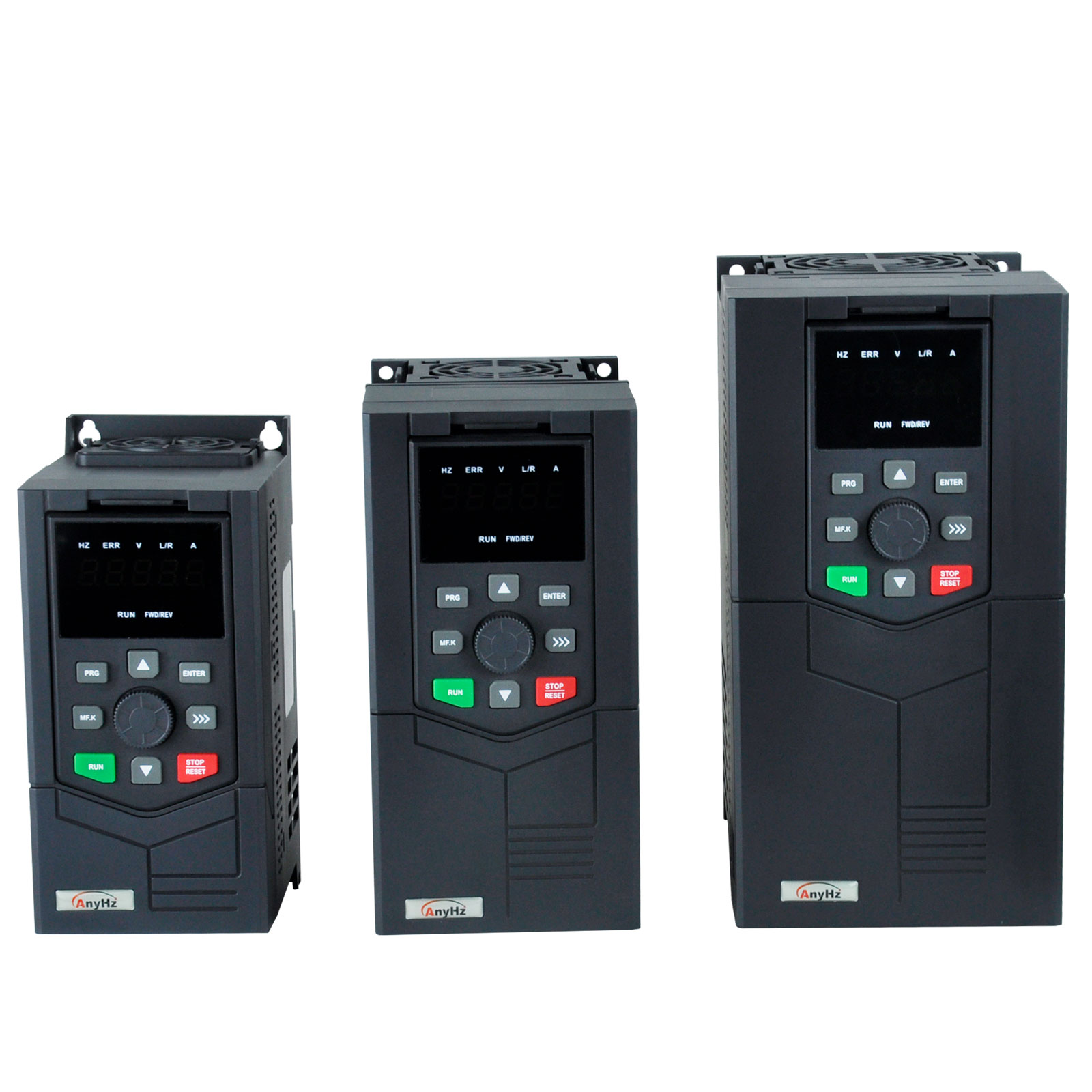
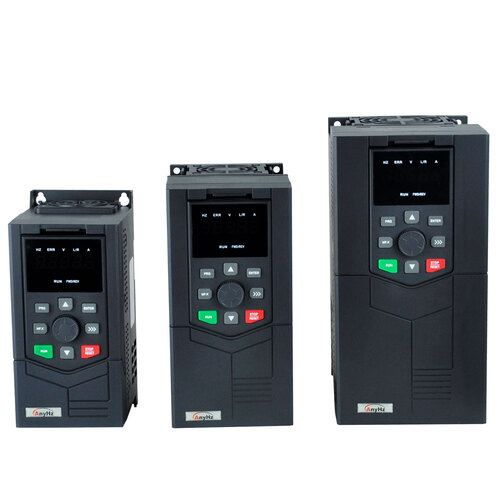
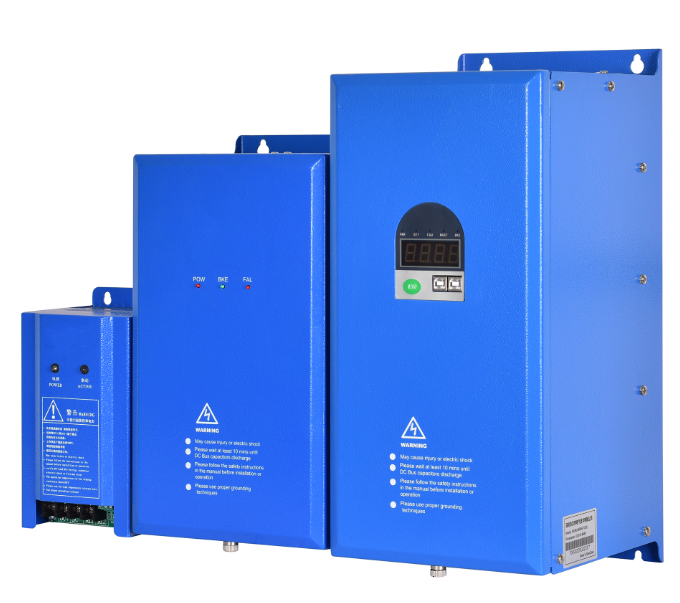
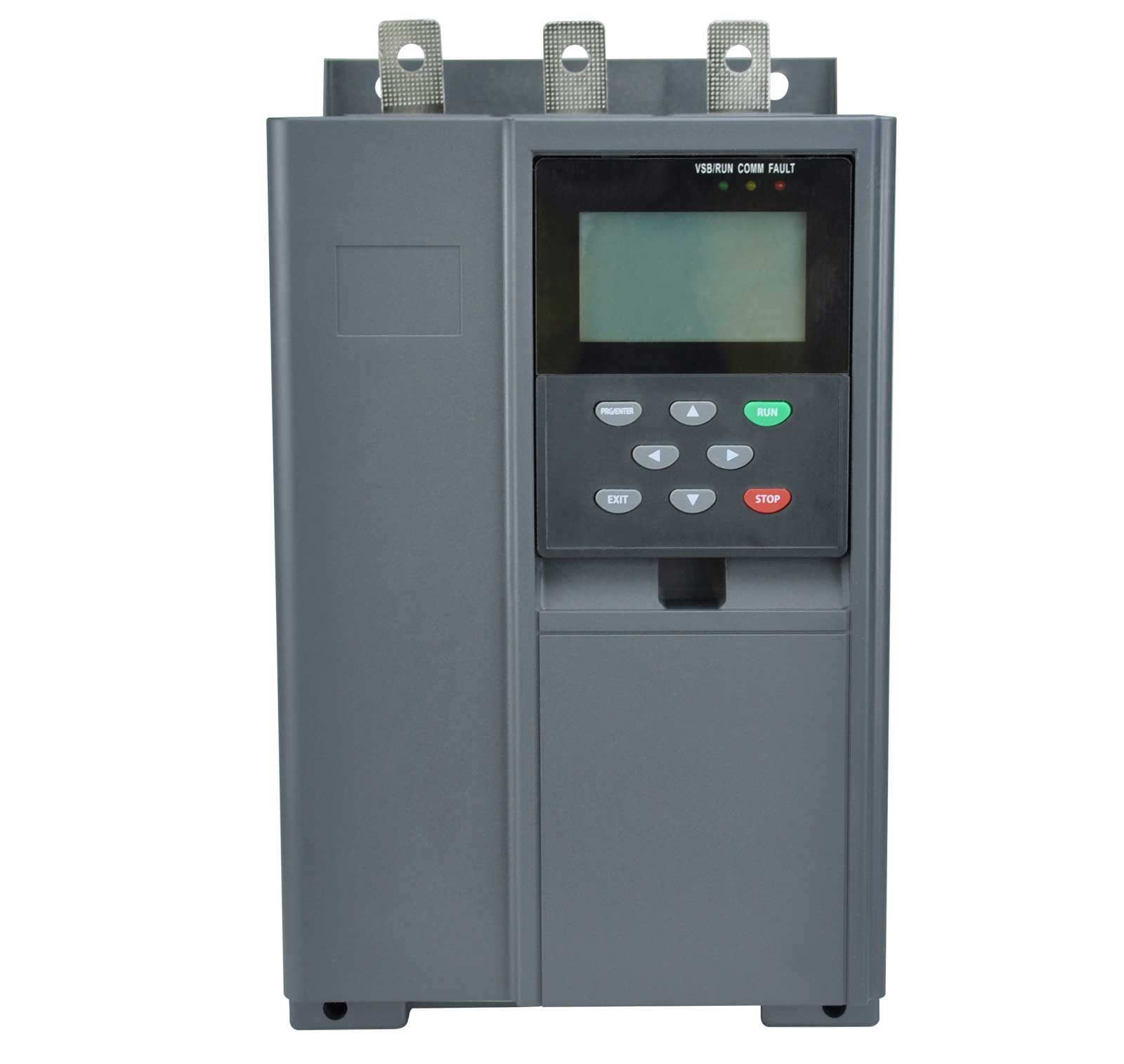
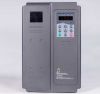
Using a general-purpose VFD for elevator applications risks passenger discomfort, premature motor failure, and regulatory non-compliance. Specialized elevator VFDs like the AnyHz FST-820 series include S-curve profiling, pre-torque compensation, and EN81-20 compliant safety logic.
2. Types of Elevator VFDs
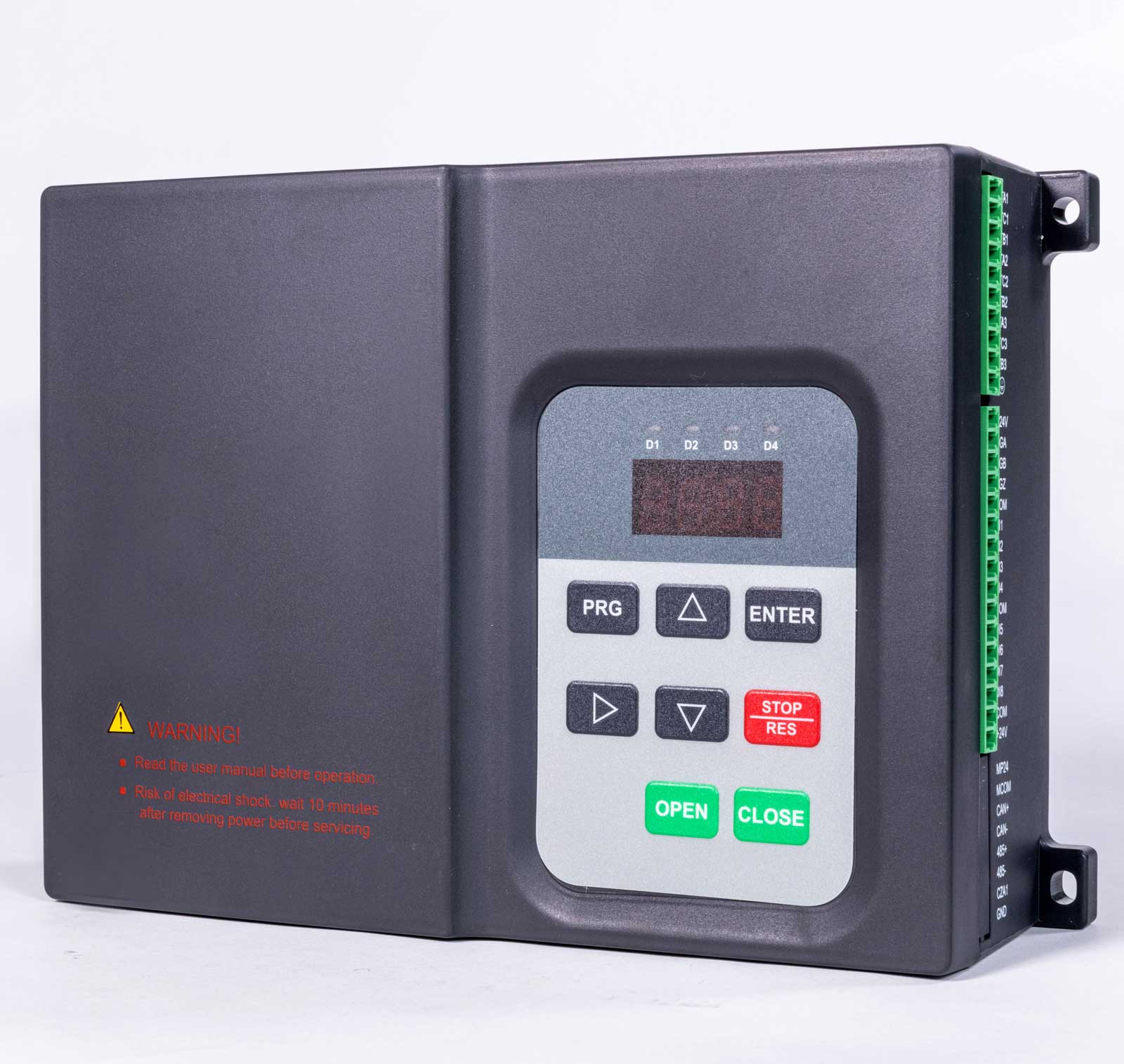
2.1 Door Drive VFDs (FST-100 Series)
Door drives control the car door and landing door mechanisms. Key requirements:
- Smooth S-curve motion for passenger comfort
- Obstacle detection and anti-pinch protection
- Dual motor support (AC asynchronous + PM synchronous)
- Door width self-learning function
Power range: 200W-750W | Voltage: Single-phase 220V | Recommended: FST-100-0R4S2 (400W) for standard doors
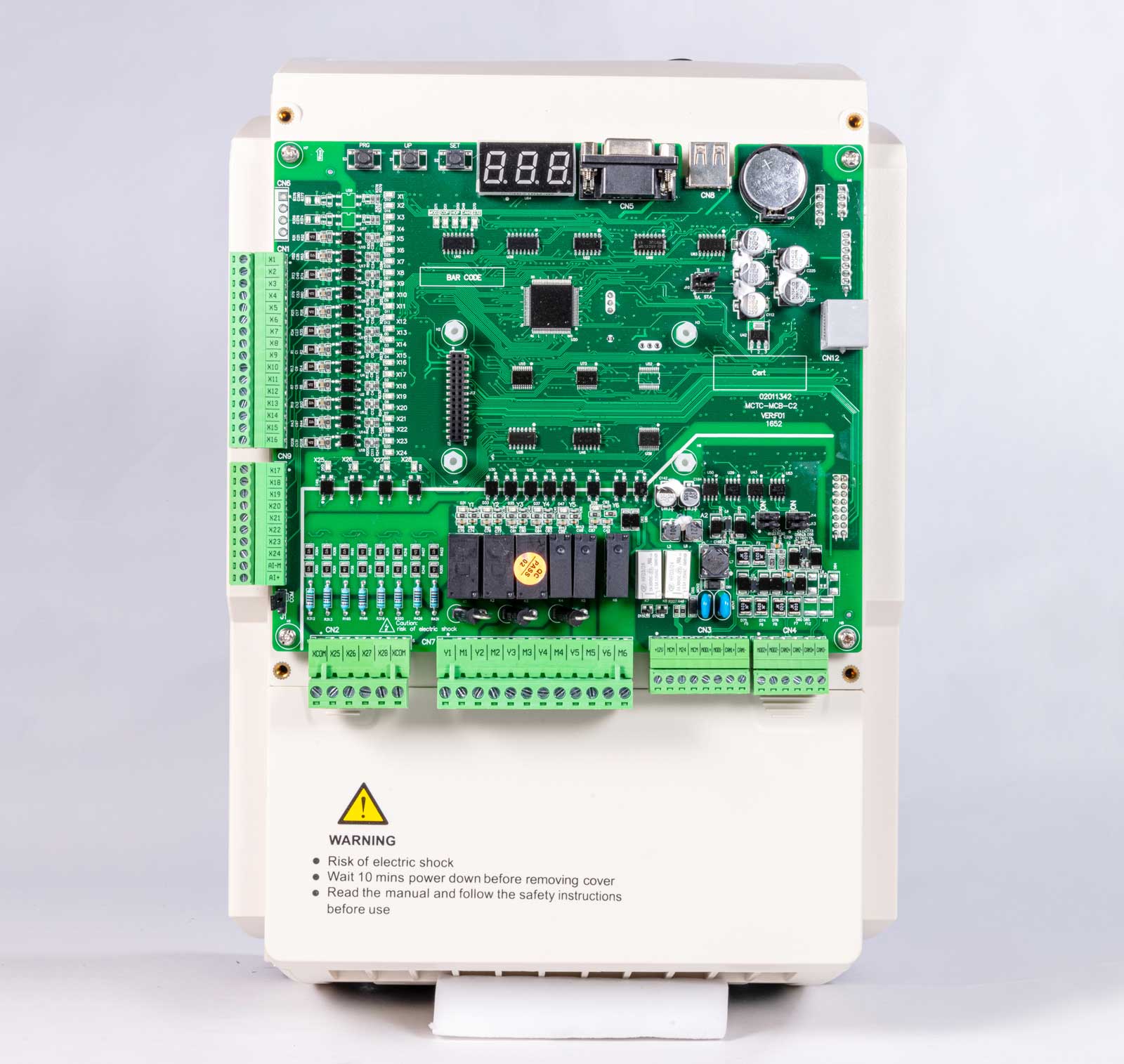
2.2 Standard Elevator VFDs (FST-820 Series)
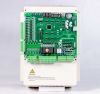
The main elevator drive controls the traction motor. Features include:
- 4-segment independent S-curve acceleration
- Pre-torque compensation (200% at 0Hz)
- 48V emergency rescue (ARD function)
- Multi-encoder interface (UVW, ABZ, Sin/Cos)
Power range: 3.7kW-30kW | Voltage: 3-phase 380V | Recommended: FST-820-11GT4 (11kW) for 15-person passenger elevator
2.3 Group Control Elevator VFDs (FST-860 Series)
For multi-elevator systems (2-8 cars), group control VFDs provide:
- Intelligent dispatching algorithms
- Traffic pattern learning
- Energy-efficient scheduling
- Centralized monitoring
Power range: 5.5kW-15kW | Recommended: FST-860-15GT4 for 4-elevator group
2.4 High-Speed Elevator VFDs (FST-880 Series)
For skyscraper applications requiring speeds >4m/s:
- Enhanced S-curve algorithms for high-speed comfort
- Advanced vibration suppression
- Precise leveling (±2mm accuracy)
Power range: 11kW-75kW | Recommended: FST-880-22GT4 for 6m/s high-speed elevator
3. Key Selection Criteria
3.1 Motor Type Compatibility
| Motor Type | Characteristics | Recommended VFD | Encoder Required |
|---|---|---|---|
| AC Asynchronous (Induction) | Lower cost, higher maintenance | FST-820 (SVC mode) | Optional (ABZ incremental) |
| PM Synchronous (Gearless) | Higher efficiency, compact | FST-820 (FVC mode) | Required (UVW commutation) |
| PM Synchronous (With Gearbox) | Balanced cost/performance | FST-820 (SVC or FVC) | Recommended |
3.2 Voltage & Power Selection
Input voltage must match building supply:
- Single-phase 220V: Home elevators (FST-820-3R7S2, 3.7kW max)
- Three-phase 380V: Standard commercial elevators (3.7kW-30kW)
- Three-phase 690V: Heavy freight elevators (custom)
3.3 Safety Standards Compliance
Elevator VFDs must comply with regional standards:
- EN 81-20/50: European standard for elevator safety
- GB 7588: Chinese national standard
- ASME A17.1: North American standard
- ISO 8100: International standard
AnyHz FST-820 series includes built-in EN 81-20 compliant safety circuits: overspeed protection, door zone detection, forced deceleration, and emergency rescue.
3.4 Encoder Selection
| Encoder Type | Resolution | Best For | Compatibility |
|---|---|---|---|
| UVW (Commutation) | Low (6-8 poles) | PM motors | FST-820 standard |
| ABZ Incremental | 1024-4096 ppr | AC motors, positioning | FST-820 standard |
| Sin/Cos 1Vpp | Very high | High-speed elevators | FST-820 optional |
| SSI Absolute | High | Positioning, safety | FST-820 optional |
4. Power Calculation & Sizing
4.1 Basic Power Formula
P = (m × g × v) / (η × 1000)
Where:
- P = Motor power (kW)
- m = Rated load + car weight (kg)
- g = Gravity (9.81 m/s²)
- v = Elevator speed (m/s)
- η = System efficiency (typically 0.7-0.85)
4.2 Quick Selection Table
| Elevator Type | Load (kg) | Speed (m/s) | Motor Power | VFD Model |
|---|---|---|---|---|
| Home elevator | 250-320 | 0.4 | 2.2-3.7kW | FST-820-3R7S2 |
| Residential (8 person) | 630 | 1.0 | 5.5-7.5kW | FST-820-5R5GT4 |
| Office (15 person) | 1000 | 1.6 | 11-15kW | FST-820-11GT4 |
| Office (21 person) | 1600 | 2.5 | 18.5-22kW | FST-820-22GT4 |
| Freight (2000kg) | 2000 | 0.5 | 15-18.5kW | FST-820-15GT4 |
| High-speed (30 person) | 2250 | 4.0 | 30-37kW | FST-880-30GT4 |
4.3 Overload Considerations
Elevator VFDs must handle dynamic overload conditions:
- Starting overload: 150-200% for 1-3 seconds
- Emergency stop: 200% braking torque
- Unbalanced load: 100% counterweight mismatch
Always size the VFD with 20-30% power margin above calculated motor power.
5. Application-Specific Selection Guide
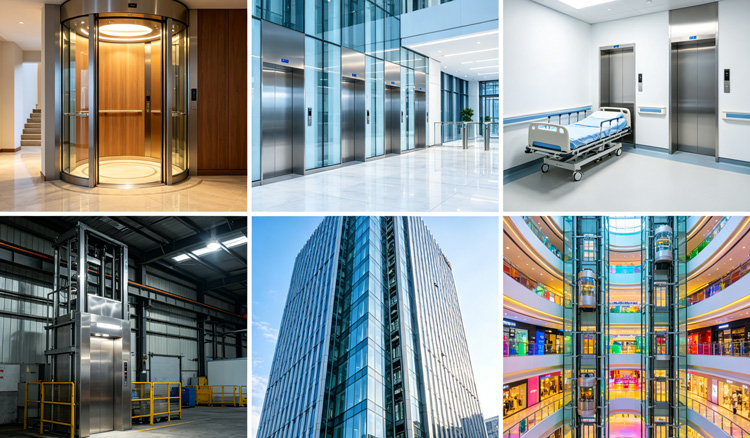
5.1 Residential Buildings (Apartments & Villas)
Requirements: Quiet operation, smooth ride, emergency rescue
Recommended configuration:
- Door drive: FST-100-0R4S2 (400W)
- Main drive: FST-820-5R5GT4 (5.5kW) for 8-person, 1.0m/s
- Encoder: ABZ incremental (1024 ppr)
- Options: 48V ARD battery, voice announcer
5.2 Commercial Buildings (Offices & Hotels)
Requirements: High duty cycle, group control, energy efficiency
Recommended configuration:
- Door drive: FST-100-0R4S2
- Main drive: FST-820-15GT4 (15kW) for 21-person, 2.5m/s
- Group control: FST-860-15GT4 for 4-elevator bank
- Encoder: Sin/Cos for high precision
5.3 Hospitals & Medical Facilities
Requirements: Ultra-smooth operation, emergency power, high reliability
Recommended configuration:
- Door drive: FST-100-0R4S2 with extended open time
- Main drive: FST-820-11GT4 (11kW) for bed elevator
- Encoder: SSI absolute (safety-rated)
- Options: UPS backup, fireman's switch, earthquake operation
5.4 Freight & Industrial Elevators
Requirements: High torque, rugged construction, long life
- Door drive: FST-100-0R7S2 (750W) for heavy doors
- Main drive: FST-820-22GT4 (22kW) for 2000kg load
- Encoder: UVW for PM motor (high efficiency)
- Options: Reinforced cabinet, vibration dampers
5.5 High-Speed & Skyscraper Elevators
Requirements: >4m/s speed, advanced vibration control, precise leveling
- Main drive: FST-880-30GT4 (30kW) for 6m/s speed
- Encoder: Sin/Cos 1Vpp (high resolution)
- Options: Active vibration damping, pressure compensation
6. Installation & Commissioning Tips
6.1 Wiring Best Practices
- Separate power and control cables: Minimum 100mm spacing
- Shielded motor cables: Mandatory for runs >50m
- Grounding: Single-point ground to avoid ground loops
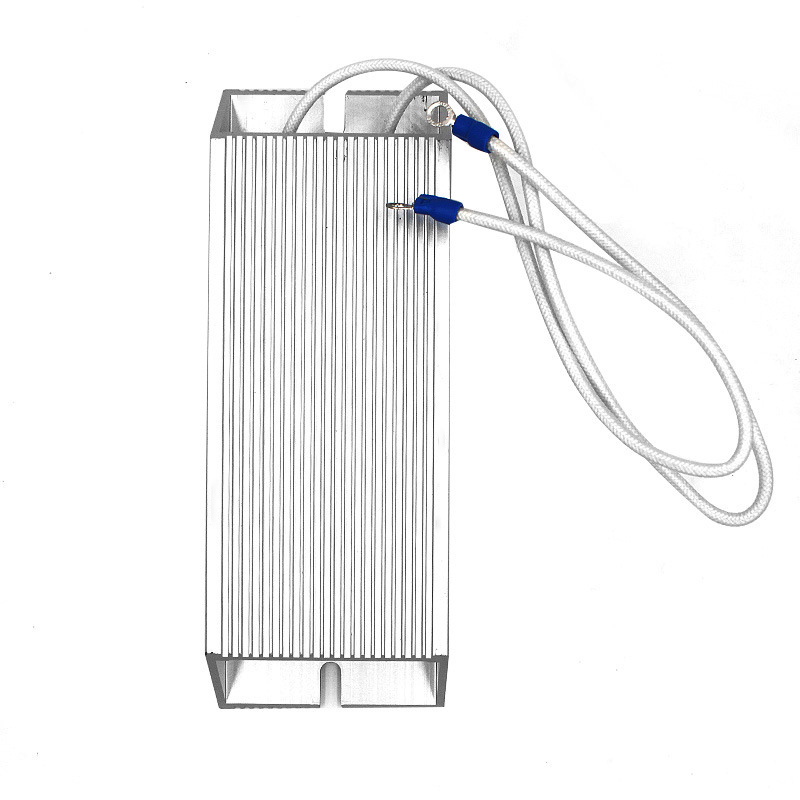
- Brake resistor: Install in ventilated area, maintain clearance
6.2 Parameter Setup Sequence
- Motor parameters: Enter nameplate data (voltage, current, frequency, speed)
- Encoder setup: Select type (UVW/ABZ/SinCos) and pulses per revolution
- Mechanical parameters: Gear ratio, sheave diameter, rope ratio
- S-curve tuning: Set acceleration, deceleration, and jerk rates
- Pre-torque calibration: Run load weighing self-learning
- Safety tests: Overspeed, emergency stop, ARD function
6.3 S-Curve Optimization
For optimal ride comfort:
- Acceleration jerk: 0.8-1.2 m/s³ (standard), 0.5-0.8 m/s³ (hospital)
- Deceleration jerk: 1.0-1.5 m/s³
- Leveling speed: 0.1-0.3 m/s
- Door open delay: 2-3 seconds after leveling
Pro Tip
Start with conservative S-curve settings and gradually increase based on passenger feedback. Use accelerometer measurements to quantify vibration levels.
7. Common Mistakes to Avoid
| Mistake | Consequence | Solution |
|---|---|---|
| Undersizing VFD power | Overheating, premature failure, safety risk | Add 20-30% margin to calculated power |
| Wrong encoder type | Motor hunting, vibration, comfort issues | Match encoder to motor type (UVW for PM) |
| Ignoring S-curve tuning | Passenger discomfort, nausea complaints | Spend time optimizing jerk rates |
| Skipping ARD test | Failed safety inspection, liability | Test 48V rescue function during commissioning |
| Poor cable routing | EMI issues, encoder faults, erratic behavior | Separate power/control, use shielded cables |
| No power quality check | Voltage imbalance, nuisance trips | Measure grid voltage before installation |
8. Elevator VFD Selection Checklist
Pre-Selection Questions
- ☐ What is the elevator type? (Passenger/freight/home/hospital)
- ☐ What is the rated load capacity? (kg)
- ☐ What is the rated speed? (m/s)
- ☐ What motor type? (AC induction/PM synchronous)
- ☐ What is the building power supply? (220V/380V/3-phase)
- ☐ How many elevators in group? (1-8)
- ☐ What safety standards apply? (EN81-20/GB7588/ASME)
- ☐ What is the budget range?
- ☐ Are there special requirements? (High-speed, outdoor, etc.)
Free Download: Complete Elevator VFD Selection Guide
Get the PDF version of this guide with:
- Detailed power calculation formulas
- Complete model selection tables
- Wiring diagrams for all configurations
- Commissioning parameter checklists
- Troubleshooting flowcharts
Need Expert Help?
Our elevator application engineers can help you select the optimal VFD configuration for your project.
Contact Technical SupportTypical response time: 4 hours during business days
 Contact Us


