1. Industry Overview: Why Food and Pharmaceutical Sectors Urgently Need VFD Retrofitting
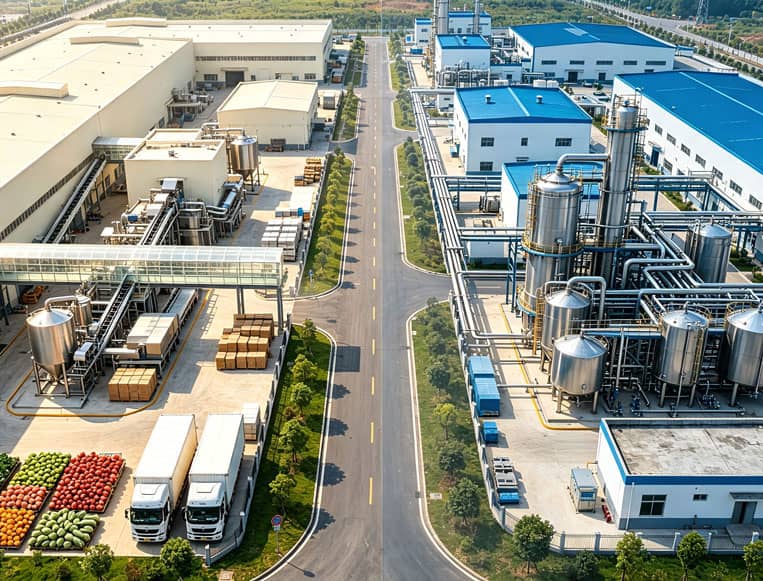
The food processing and pharmaceutical industries are vital pillars of the global economy—and simultaneously among the most energy-intensive manufacturing sectors. The food and beverage end-user segment alone accounts for approximately 14% of the global variable frequency drive (VFD) market, with demand continuing to grow year over year.
In both industries, motor-driven equipment such as fans, pumps, mixers, and conveyors traditionally operates at fixed grid frequency (50/60 Hz). This results in significant "oversizing" inefficiencies—equipment typically runs at only about 60% of optimal efficiency, wasting enormous amounts of energy through throttling valves, mechanical brakes, and bypass dampers.
Beyond energy waste, these sectors impose stringent requirements on hygiene standards, process precision, and equipment reliability:
-
Food Processing: Requires gentle handling to prevent product damage, strict temperature control to avoid spoilage, and equipment surfaces that meet FDA/USDA sanitary standards.
-
Pharmaceutical Manufacturing: Demands precise speed control for fermenter agitation, cleanroom ventilation, and purified water circulation—any deviation can compromise batch consistency and regulatory compliance (GMP, FDA 21 CFR Part 11).
Variable Frequency Drives (VFDs) address both challenges simultaneously. By modulating motor speed, VFDs enable stepless speed regulation, soft starting, and closed-loop process control—delivering energy savings of 20%–50% while improving product quality and extending equipment lifespan.
2. Food Processing Industry: Four Core VFD Application Scenarios
2.1 Fans and Pumps: Variable-Frequency Energy Saving in Conveying, Washing, and Drying
Food production lines rely heavily on centrifugal fans, circulation pumps, CIP (Clean-in-Place) wash pumps, and vacuum pumps. Most of these operate under fluctuating loads that vary with production schedules. Under fixed-speed operation, flow is controlled by throttling valves or dampers—a highly inefficient method that dissipates energy as hydraulic or aerodynamic resistance.
VFD Retrofit Strategy:
-
Implement PID closed-loop control to automatically adjust motor speed based on real-time process requirements (e.g., wash water pressure, drying air velocity).
-
Fans and pumps exhibit quadratic torque characteristics: a 10% reduction in speed yields approximately a 27% reduction in power consumption. Typical energy savings range from 20% to 50%.
-
Pump retrofits eliminate water hammer effects, extending pipeline and valve service life by 30% or more.
Case Reference: A mid-sized dairy plant retrofitted its cooling water pumps and CIP wash pumps with FST-650L VFDs. The result: an 18% overall production line energy reduction and a 30% decrease in equipment failure rates.
2.2 Mixers and Blenders: Constant Torque Speed Regulation for Product Consistency
Dough kneading, sauce blending, and beverage formulation are highly sensitive to rotational speed. In bakery production lines, for example, dough mixing requires three distinct phases: low-speed incorporation, medium-speed gluten development, and high-speed extension. Fixed-speed motors cannot match this complex process curve.
VFD Technical Advantages:
-
Multi-speed programming: The FST-650L supports up to 16 preset speed segments, enabling one-touch switching between recipe-specific speed profiles.
-
Constant torque output: Even at low speeds with high-viscosity materials, the VFD maintains stable torque, preventing uneven mixing or motor stall.
-
Soft-start capability: Eliminates mechanical shock during startup, protecting gearboxes and agitator blades from fatigue damage.
2.3 Conveyors: Multi-Speed Control and Smooth Start/Stop
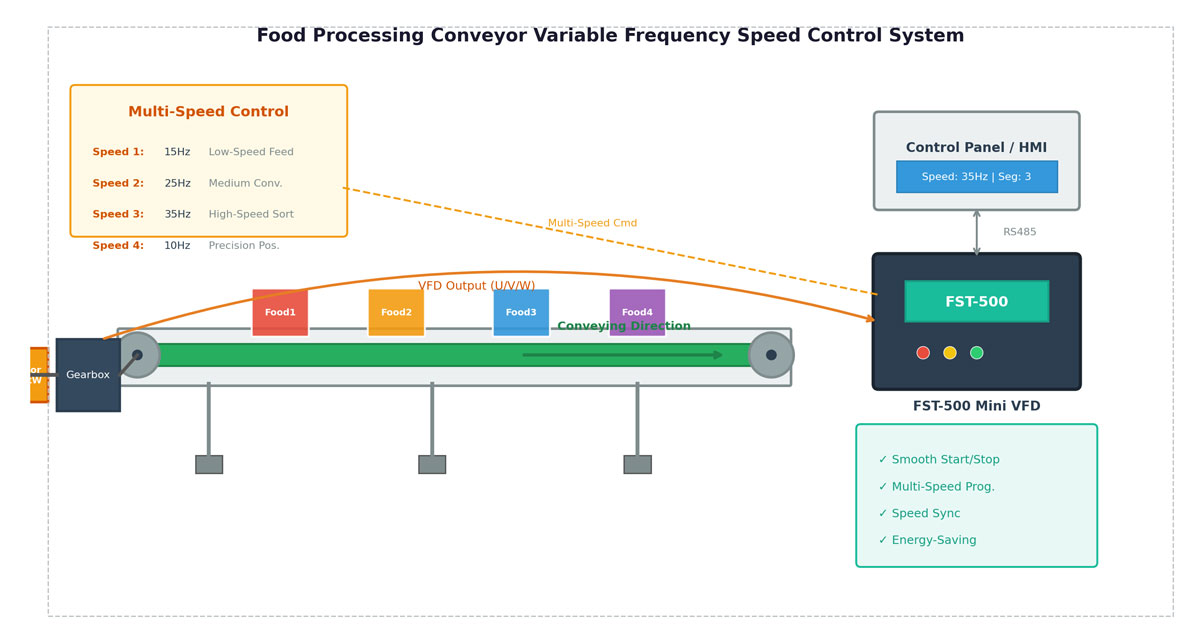
Conveyor belts span the entire food production chain—from raw material intake through processing, packaging, and dispatch. VFDs deliver:
-
Speed synchronization: RS485 Modbus communication with upstream packaging machines and downstream palletizers prevents product pile-ups or gaps.
-
Smooth acceleration/deceleration: Prevents toppling of bottled beverages and breakage of fragile baked goods during line starts and stops.
-
Energy-efficient operation: Automatic speed reduction during no-load or low-load periods.
2.4 Packaging and Filling Machinery: High-Precision Positioning and Dynamic Response
Horizontal flow wrappers and liquid filling machines demand exceptional motor dynamic response and speed stability. When paired with PLCs and optical sensors, VFDs enable:
-
Constant packaging film tension, reducing material waste;
-
Real-time filling speed adjustment based on liquid level feedback, improving filling accuracy by 20% or more.
3. Pharmaceutical Industry: VFD Technology for GMP Compliance and Energy Reduction
Pharmaceutical plants are recognized as "energy giants." Fermenters, air compressors, centrifuges, and cleanroom HVAC systems operate continuously year-round, making VFD retrofits highly attractive—with typical payback periods of 6 to 18 months.
3.1 Fermenter Agitators: Process-Curve Speed Control
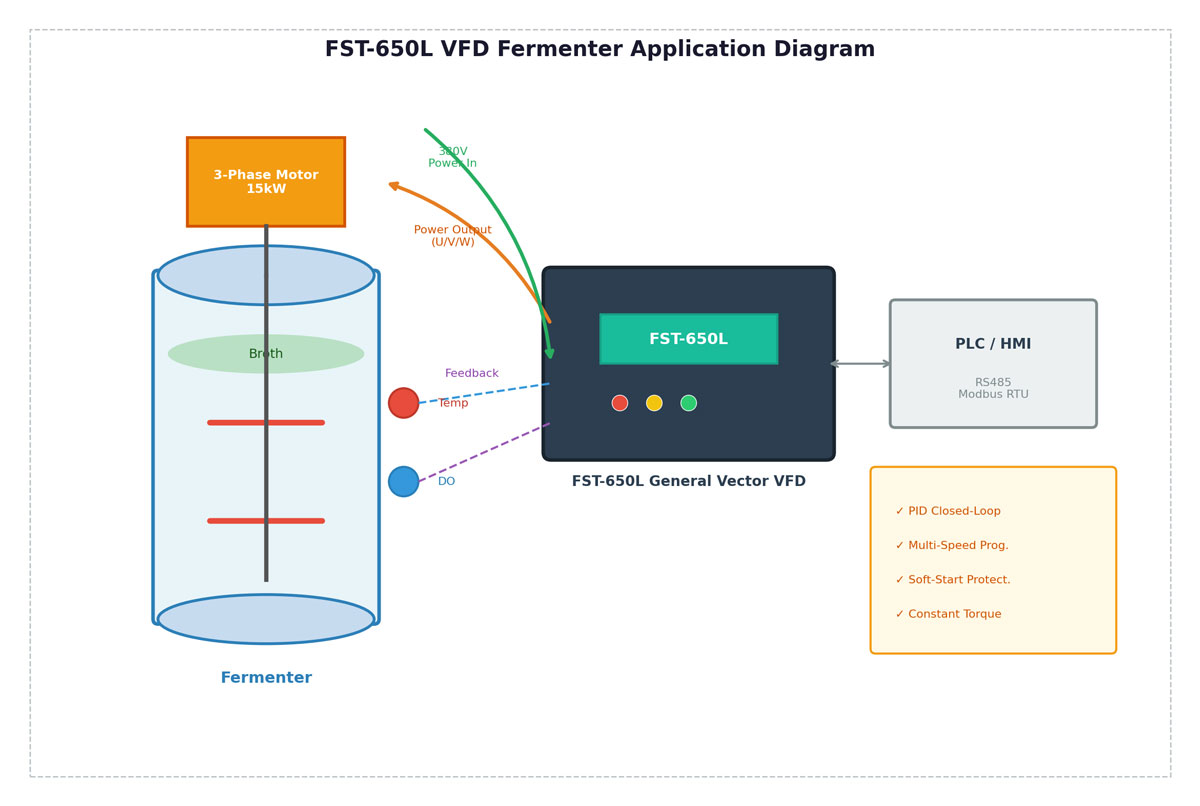
The fermenter is the heart of pharmaceutical bioprocessing (antibiotics, vitamins, enzyme production). Fermentation progresses through distinct phases—oxygen uptake, production, and stabilization—each requiring different agitation speeds. Some processes even follow specific "fermentation curves" (step-down or linear ramp profiles).
VFD Retrofit Value:
-
Eliminates bulky mechanical gearboxes, simplifying the drivetrain and improving transmission efficiency.
-
Real-time speed adjustment based on dissolved oxygen, temperature, and viscosity feedback, optimizing microbial growth conditions.
-
Fermenter agitators are constant torque loads; speed reduction yields energy savings of approximately 15%–20%.
Sizing Tip: If the broth becomes viscous or forms sticky clumps during downstream filtration, consider oversizing the VFD by one power grade to ensure reliable low-frequency startup.
3.2 Air Compressors and Vacuum Pumps: Constant Pressure Supply with Noise Reduction
Pharmaceutical workshops demand ultra-clean compressed air (oil-free, dry, particle-free). When multiple compressors operate in parallel, VFDs with pressure closed-loop control deliver:
-
Stable header pressure (e.g., 0.19 MPa with fluctuations under 0.04 MPa);
-
Automatic adjustment of running units and motor speed based on real-time air demand, achieving average energy savings of 30%–53%;
-
Significant noise reduction and reduced drive belt wear.
3.3 Centrifuges and Separation Equipment: Precision Control for Higher Yield
Pharmaceutical centrifuges require strict control over acceleration curves and braking characteristics. VFDs provide:
-
Custom S-curve acceleration/deceleration to prevent disruption of delicate sample layers;
-
DC injection braking or dynamic braking for faster cycle times and higher equipment turnover;
-
Torque compensation to maintain speed stability during sudden load changes.
3.4 HVAC and Cleanroom Ventilation: Precise Temperature and Humidity Control
GMP-compliant pharmaceutical facilities require tightly controlled environments. VFDs controlling air handling units, cooling towers, and chilled water pumps—integrated with temperature and humidity sensors—enable:
-
Closed-loop constant temperature and humidity control;
-
Automatic frequency reduction during night shifts or low-load periods, saving 20%–40% on HVAC energy;
-
Reduced mechanical wear on fans and lower maintenance costs.
4. Product Selection Guide: FST-650L vs. FST-500 Series
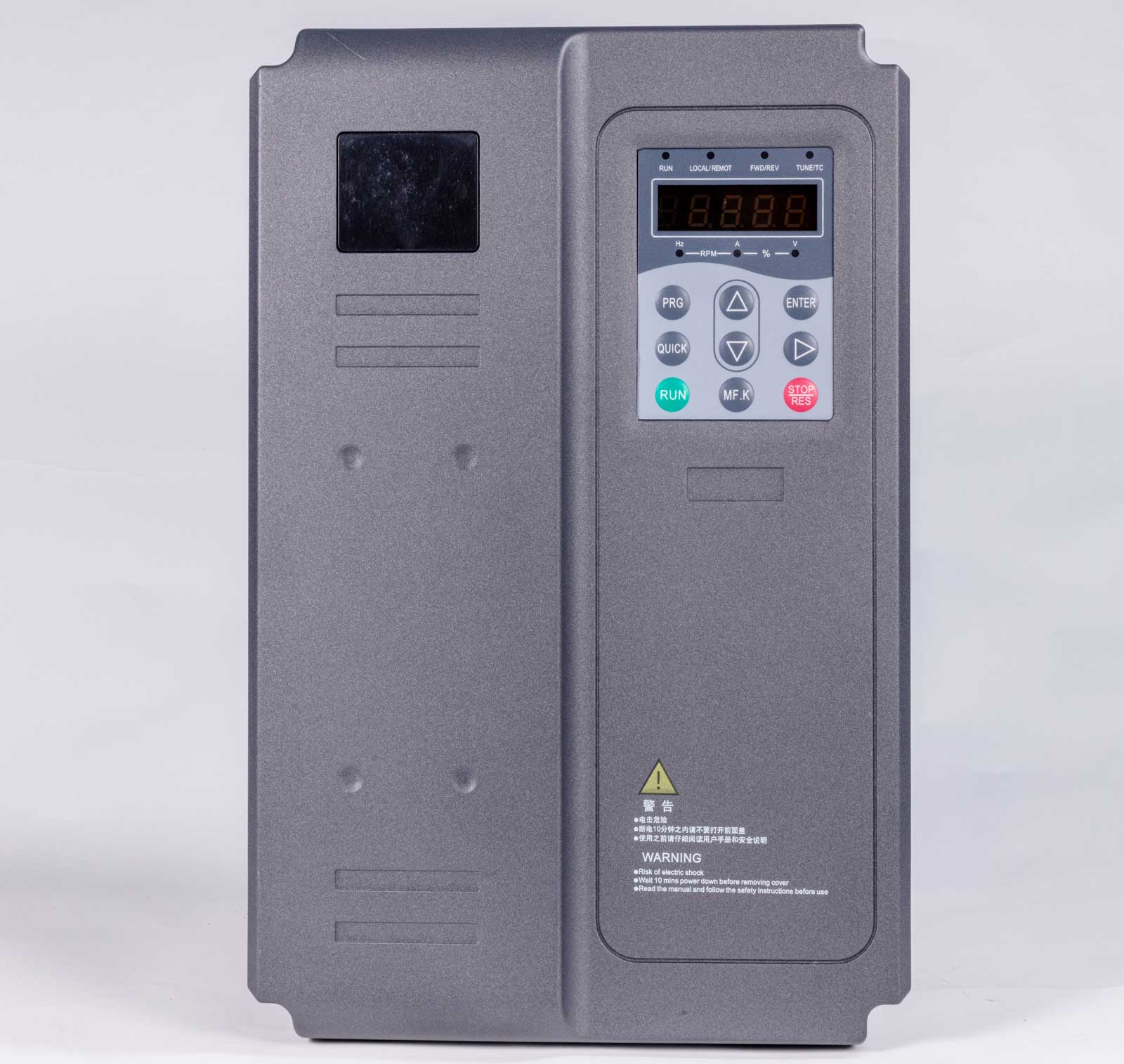
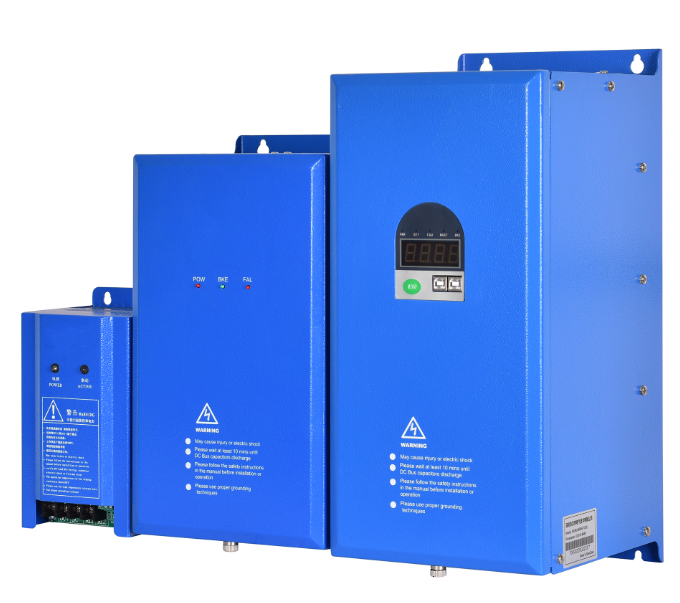
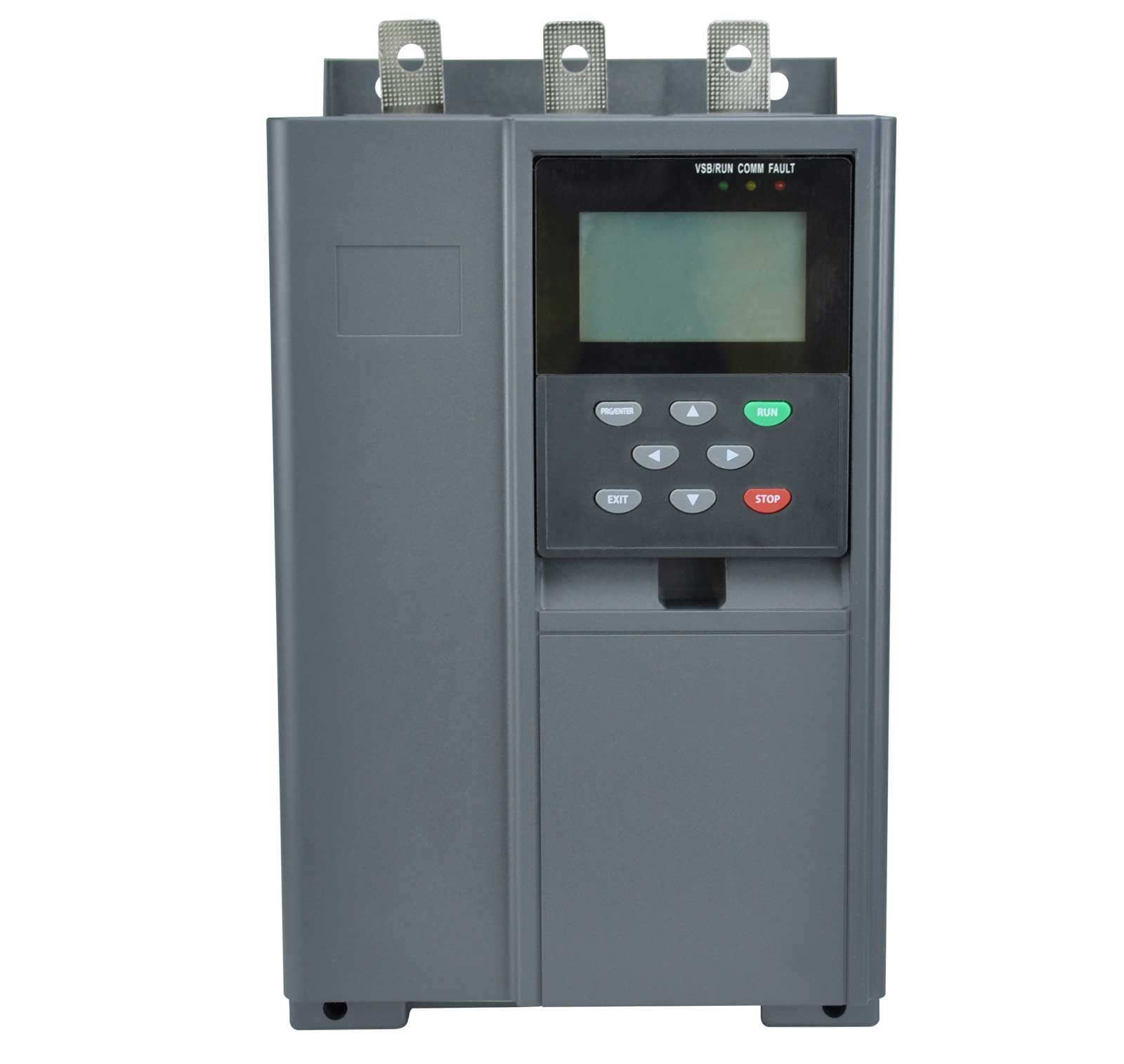
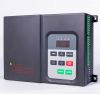
For the unique demands of food and pharmaceutical applications, the FST-650L General-Purpose Vector VFD and the FST-500 Mini VFD offer differentiated solutions.
4.1 FST-650L Series: The Reliable Choice for Medium-to-Large Equipment
| Feature |
Specification |
Industry Value |
|
Control Mode
|
Sensorless Vector Control (SVC) / V/F Control
|
High starting torque for mixers; efficient fan/pump speed regulation
|
|
Power Range
|
0.75 kW – 630 kW
|
Covers everything from packaging machines to large fermenters
|
|
Speed Range
|
1:100
|
Meets wide-range fermentation process requirements
|
|
Communication
|
RS485 + Modbus RTU
|
Seamless PLC and HMI integration for production line coordination
|
|
Protection Rating
|
IP20
|
Adaptable to food plant wash-down environments
|
|
Protection Functions
|
Overcurrent, overvoltage, undervoltage, overheat, phase loss, short circuit
|
Ensures continuous production and minimizes unplanned downtime
|
Recommended Applications: Fermenter agitation (5.5 kW–90 kW), large centrifugal fans, central HVAC systems, centrifuges.
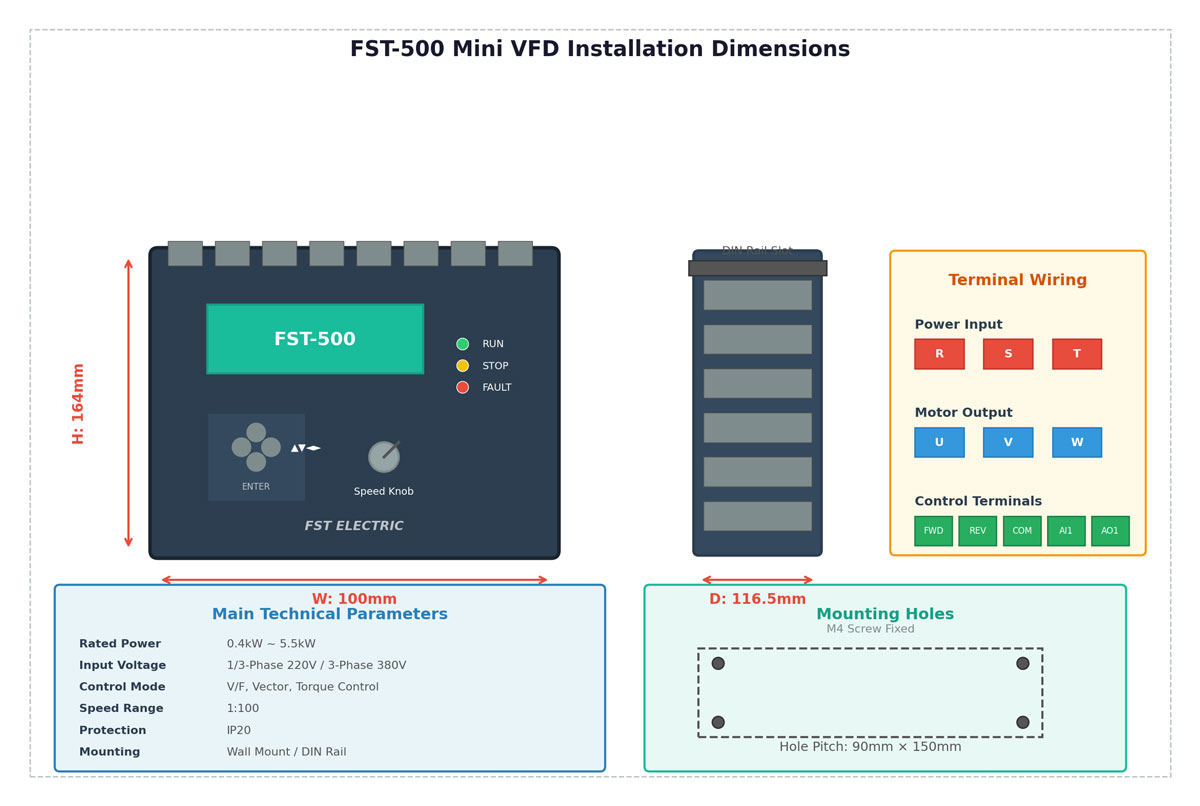
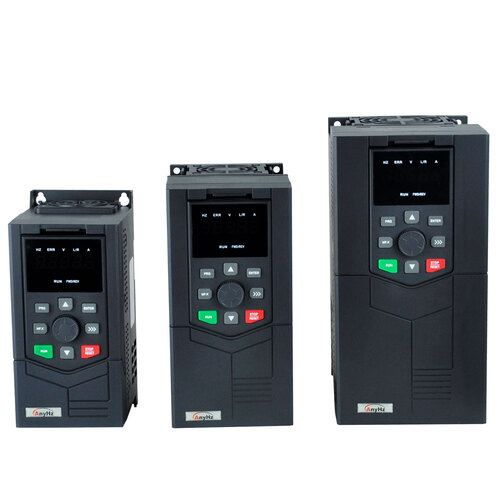
4.2 FST-500 Series: Compact and Cost-Effective for Smaller Equipment
| Feature |
Specification |
Industry Value |
|
Control Mode
|
V/F, Vector Control, Torque Control
|
Conveyors, small mixers, packaging machines
|
|
Power Range
|
0.4 kW – 5.5 kW
|
Small food machinery and laboratory equipment
|
|
Form Factor
|
Mini design (as compact as 100 × 164 × 116.5 mm)
|
Saves panel space; ideal for retrofitting legacy equipment
|
|
Built-in PID
|
Constant pressure / constant temperature closed-loop
|
Small pumps and cooling systems
|
|
Operation
|
User-friendly keypad with auto-tuning
|
Reduces commissioning time and technical barriers
|
Recommended Applications: Food conveyors, small mixers, filling machines, lab-scale reactors, parts washers.
4.3 Quick Selection Reference
| Application |
Load Type |
Recommended Model |
Power Sizing |
|
Fans, Pumps
|
Quadratic torque
|
FST-650L
|
Same as motor or one grade lower
|
|
Fermenter Agitators
|
Constant torque
|
FST-650L
|
Same as motor or one grade higher (viscous media)
|
|
Conveyors
|
Constant torque / Light load
|
FST-500 / FST-650L
|
Same as motor
|
|
Packaging Machinery
|
Dynamic response
|
FST-500
|
Same as motor
|
|
Air Compressors
|
Constant torque
|
FST-650L
|
One grade higher
|
5. Energy Savings Analysis: ROI Calculation
The table below estimates annual savings for a mid-sized pharmaceutical plant retrofitting typical equipment:
| Equipment Type |
Qty |
Unit Power |
Energy Savings Rate |
Annual kWh Saved |
Annual Cost Savings (@ $0.11/kWh) |
|
Fermenter Agitators
|
10
|
15 kW
|
18%
|
18,900 kWh
|
$2,079
|
|
Cooling Water Pumps
|
6
|
22 kW
|
35%
|
40,400 kWh
|
$4,444
|
|
Air Compressors
|
2
|
75 kW
|
40%
|
210,000 kWh
|
$23,100
|
|
Cleanroom HVAC Fans
|
4
|
30 kW
|
25%
|
63,000 kWh
|
$6,930
|
|
Total
|
—
|
—
|
—
|
332,300 kWh
|
$36,553
|
Note: Actual savings depend on load factor, operating hours, and control strategy. We recommend conducting a site energy audit to establish baseline consumption before retrofitting.
6. Installation, Commissioning, and Maintenance Best Practices
6.1 Environmental Requirements
-
Temperature: -10°C to +40°C (for high-temperature food workshops, ensure adequate ventilation or air conditioning).
-
Humidity: < 95% RH, non-condensing (critical in pharmaceutical cleanrooms).
-
Protection: In food wash-down zones, select IP54 or higher, or mount inside sealed electrical enclosures.
-
EMC: Keep VFD power cables separate from PLC and sensor signal cables to prevent electromagnetic interference.
6.2 Key Commissioning Steps
-
Motor parameter auto-tuning: Accurately input motor nameplate data (rated power, current, speed) and execute static or dynamic auto-tuning.
-
Acceleration/deceleration time: 3–5 seconds for food machinery to avoid mechanical shock; S-curve profiles recommended for centrifuges.
-
PID tuning: Start with factory defaults for fan/pump applications, then fine-tune P and I gains based on system response.
-
Torque boost: Increase low-frequency torque compensation for mixer loads to prevent startup stalling.
-
Multi-speed presets: Configure speed segments via external terminals or communication commands for each process stage.
6.3 Preventive Maintenance Checklist
-
[ ] Monthly: Inspect heatsink dust accumulation; ensure unobstructed airflow.
-
[ ] Quarterly: Tighten input/output terminals; inspect cable insulation integrity.
-
[ ] Semi-annually: Back up parameter sets; inspect electrolytic capacitors for bulging.
-
[ ] On fault alarm: Check fault codes first (e.g., OC—overcurrent, OV—overvoltage, OH—overheating) and consult the manual for troubleshooting.
7. Conclusion
The food processing and pharmaceutical industries face mounting pressure from rising energy costs, tightening environmental regulations, and escalating quality standards. VFD technology offers a dual benefit: 20%–50% energy reduction alongside precision process control, improved product consistency, reduced equipment failure rates, and extended mechanical life.
The FST-650L Series, with its wide power coverage, vector control precision, and high reliability, serves as the ideal drive core for large-scale pharmaceutical and food processing equipment. The FST-500 Series, leveraging its compact footprint, flexible configuration, and excellent cost-performance ratio, excels in small-to-medium food machinery applications.
Whether you are planning a new intelligent production line or retrofitting legacy equipment for energy efficiency, selecting the right VFD and implementing proper commissioning and maintenance practices will deliver substantial economic returns and sustainable competitive advantages.



 Contact Us


